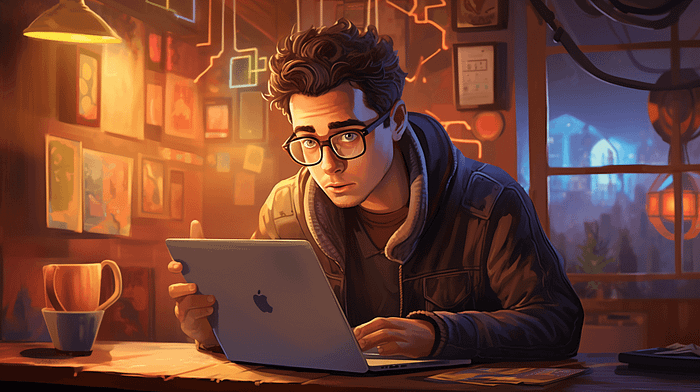
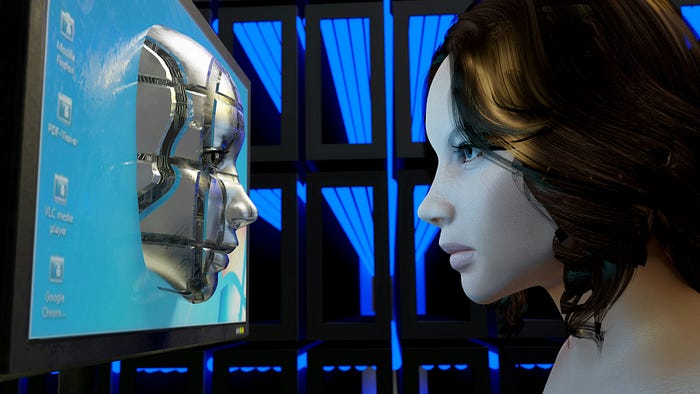
A Gen X memoir on growing up before screens, and somehow ending up here.
I was born in the latter part of 1979. Generation X. The generation that had no inkling about what technology would bring.
We didn’t know we were living in the “before times.” We were just living. Playing. Imagining. Making do with what we had, which was rarely much, but somehow always enough.
This is the story of how technology evolved in my lifetime. And how I evolved with it, sometimes kicking and screaming, sometimes marveling like a child, always adapting because that’s what our generation does.
More Than a Town, Less Than a City
I grew up in a small town in Aklan, Philippines. It was the capital of our province, technically, but we were still trying to compete with cities. We were a town, not a city. The distinction mattered.
We had no big malls. Just shopping centers with small businesses and grocery stores. Sari-sari stores on every corner. The kind of place where everyone knew everyone, and news traveled faster than any technology could carry it.
The first low-rise mall didn’t arrive until 2002, the same year my firstborn came into the world. My daughter and the mall share a birth year. That’s how recent “modern” was for us.
The Dirt Road Generation
Before screens, there was dirt.
We played on unpaved roads. Marbles scattered on the ground, knees scraped, hands dusty. We played pitiw, flicking sticks with precision that would later translate to… nothing useful, except maybe patience and hand-eye coordination.
We played patintero in the streets until the sun set and our mothers called us home. We played tagu-taguan under the moonlight, hiding behind banana trees and water tanks, hearts pounding, breathing heavily, trying not to giggle.
We played luksong tinik and luksong baka, jumping over each other’s bodies like tiny acrobats with no training and no fear. We got bruised. We got scraped. We got up and played again.
There were no participation trophies. Just the joy of winning and the sting of losing and the certainty that tomorrow we’d be back to try again.
Imagination Was Our Only App
We didn’t have dollhouses. We had boxes. Blankets. Towels. Our imagination was the operating system, and it never crashed.
I didn’t have dolls growing up. What I had was paper, scissors, and pencils. I would draw my own paper dolls, cut them out, create wardrobes for them, give them names and stories, and entire lives.
When I wanted a baby to hold, I would roll a folded blanket and wrap it with a towel. That was my doll. I would rock it, sing to it, pretend to feed it. It was enough. It was everything.
I would talk to myself in the mirror, practicing conversations, playing characters, having entire dialogues with an audience of one. I thought nobody knew. Turns out, mothers always know.
We played bahay-bahayan, pretending to be families, role-playing. Someone was the mother, someone the father, someone the annoying younger sibling. We cooked invisible food in invisible kitchens and served it on leaves and bottle caps.
We were storytellers before we knew the word. World-builders existed before video games. We were training our imaginations without knowing we’d need them later.
The Black-and-White Era
We didn’t have a TV at first. Entertainment meant walking to a neighbor’s house or a relative’s and watching whatever they were watching.
Betamax was magic. Could you watch a movie at HOME? Without going to a cinema? The concept alone was revolutionary.
Then came VHS. Bigger tapes. Slightly better quality. The eternal debate about which was superior was resolved only when both became obsolete.
When we finally got our own TV, it was black-and-white. My father controlled the remote, which meant his programs took priority. If I wanted to watch Goku power up on Dragon Ball, I had to walk to my cousin’s house. They had a color TV. The Kamehameha wave looked completely different in color, let me tell you.
The Cousin Economy
Growing up, cousins were everything. They were our internet before there was internet. Our app store. Our lending library.
My cousins had Legos. We didn’t. So I would visit and build for hours, knowing I’d have to leave the creations behind when I went home. That was fine. The building was the point, not the keeping.
A cousin gave us an old Nintendo. Hand-me-down joy. Games that had been played to death by other hands were now new to ours.
Tetris came from a cousin, too. Borrowed, not owned. We passed things around like that. Nothing was really “mine” or “yours.” It was “ours, for now.”
The Library Before Google
Research meant the public library. Actual books. Actual pages. The smell of old paper and the silence of people learning.
My mother would buy thick books but not encyclopedia sets, from peddlers who came door to door, paying in installments because we couldn’t afford the full price up front. Those books sat on our shelf like treasure. When I needed to know something, I didn’t type a question into a search bar. I pulled a heavy book from the shelf and searched the index.
And if the answer wasn’t there? You asked someone older. Or you just didn’t know. Not knowing was acceptable then. We weren’t expected to have all the answers in our pockets.
The Tape Recorder Era
In college, research meant tape recorders. Clunky machines with cassettes that needed rewinding, fast-forwarding, rewinding again. I conducted interviews, then hunched over a typewriter to transcribe every word. Play. Pause. Type. Rewind. Repeat.
I missed classes because deadlines didn’t care about how fast my fingers were. The recording was thirty minutes. The transcription took hours. There was no shortcut. There was only endurance.
When I was in research years later, I used Otter. It transcribes while I think. What once cost me class attendance now costs me nothing but a click.
Wasn’t that evolved technology?
I used to add subtitles to videos manually. A tool that required me to type every word, synced to every second of conversation. Tedious. Time-consuming. Maddening when the timing was off by half a breath.
Now? Auto-caption in editing apps. One click. The words appear, synced and ready. I adjusted a few errors, and I’m done.
Wasn’t that evolved technology too?
We’ve been using it all along. We just never stopped to name it.
The Text Message Revolution
When text messaging started in 1997, I didn’t have a phone.
Let that sink in. A technology emerged, and I couldn’t access it.
So I borrowed. Friends would let me send up to 3 text messages. Three. I had to choose my words carefully. No rambling. No “haha.” Every character counted.
I got my first phone in 2000. An old hand-me-down from a friend. A heavy Ericsson brick. It made calls. It sent texts. It felt like holding the future.
The Smartphone Shift
By 2005, smartphones were emerging. But they weren’t for people like me. They were company phones. Status symbols. Gadgets that announced, “I am important enough to be reached at all times.”
Then the phones got smaller. Then bigger again. Then smaller. Then bigger. Every year, a new release. Every year, the old one suddenly felt ancient.
Somewhere along the way, phones stopped being phones and became extensions of ourselves. Our calendars. Our cameras. Our connection to everyone and everything, all the time.
And with connection came disconnection. The more reachable we became, the less present we seemed.
The Social Media Illusion
When social media started, everyone was busy finding connections.
Long-lost elementary school classmates suddenly appeared as friend requests. People you hadn’t thought about in decades were now in your feed, sharing photos of their breakfast. It felt like magic. The world got smaller. Everyone was findable.
I reconnected with elementary school friends. People I had shared desks with, played patintero with, and borrowed pencils from. I thought we were still friends. The platform said we were “connected.” Surely that meant something.
Then I heard through a neighbor that one of these “friends” had been asked how she knew me and why we were connected. The question carried spite. Or maybe I imagined the spite. But the fact that I had to wonder told me everything.
I asked myself: would I say the same about her to someone else? Would I question our connection with that tone?
And then I realized — we weren’t friends anymore. We hadn’t been for years. This person had never even said hi on Messenger. We were just connected by a platform. Names on each other’s lists. Numbers in each other’s friend counts.
Social media gave us a window into people’s lives. But windows work both ways. We started looking and comparing.
Before social media, there were gossip and spiteful comments, yes. But they happened in living rooms and over fences. They required effort. They required presence.
Social media made it effortless. It gave us that window to peer through every single day. To smirk or smile at what we saw. To judge silently, without consequence, without confrontation.
And while we were busy looking through other people’s windows, we were carefully curating our own.
Front stage. Backstage.
We learned these roles without anyone teaching us. The front stage is what we show — the vacations, the promotions, the happy family photos, the filtered faces. The backstage is what we hide — the arguments, the anxiety, the mess on the floor just outside the frame, the tears we cried ten minutes before posting that smiling selfie.
We perform for an audience that’s also performing. Everyone is watching everyone. No one sees anyone.
The Read-and-Ignore Era
Now we have Apple Watches connected to our phones.
Someone calls. Someone messages. You see it on your wrist before you even reach for your phone. You know exactly who it is and what they want.
And sometimes… You just don’t respond.
Not because you’re busy. Not because you didn’t see it. But because you don’t have the urge. Because responding feels like effort. Because the message can wait, and waiting has become acceptable.
We read on the watch and pretend we didn’t see. We leave messages on “read” and tell ourselves we’ll reply later. Later becomes never. Never becomes normal.
And yes, we are entitled to our privacy. Our time. Our energy. We don’t owe anyone an instant response.
But here’s the part that stings:
When WE are the ones reaching out. When WE are the ones in need. When we send the message and watch it sit there, seen but unanswered… we feel abandoned. We feel ignored. We feel exactly what we’ve done to others.
Technology gave us the tools to connect across oceans, across time zones, across decades.
And somehow, we use those same tools to disconnect from the person sitting right next to us.
Connecting and disconnecting. At the same time. With the same device.
And Then Came AI
And now, we have artificial intelligence.
How we use AI depends on how we value our work and gifts.
Before ChatGPT launched in late November 2022 and enveloped the world by early 2023, artificial intelligence already existed. It just wore different faces.
Grammarly launched in 2009, quietly correcting our grammar and spelling before we even knew AI was involved. Siri arrived in 2011, Alexa in 2014 — voice assistants that felt like magic but were just early steps. Jasper AI emerged in 2021, helping marketers write copy. Copy.ai, QuillBot, autocomplete in our emails — AI had been slipping into our daily lives for years before anyone called it a revolution.
We just didn’t call it AI. We called it “smart technology.” We called it “helpful tools.” We didn’t panic about it replacing us because it wasn’t writing essays or creating art. It was fixing typos and setting timers.
When I joined a global research group in 2021, I wasn’t handed an AI writing assistant. But they paved the way for me to discover the tools to hone the gifts I already had. I had to listen to hours of videos and audio recordings, capturing every gist and essence, filling in gaps that sometimes refused to be filled. So I used Otter to transcribe. It listened while I processed. It was typed while I analyzed.
Wasn’t that AI?
I was happy that my blemishes were smoothed by a photo app. Camera 360 made my skin look rested even when I wasn’t. It softened the tired lines. It brightened what exhaustion had dulled.
Wasn’t that AI?
We were already using it. We just hadn’t named it yet.
Then ChatGPT arrived, and suddenly everyone noticed. And with the noticing came the fear.
AI had been with us all along. We only started fearing it once we gave it a name.
And with fear came something uglier: hypocrisy.
There are those who use AI in private and condemn those who admit it in public. They whisper prompts into their devices at midnight and point fingers by morning. They polish their prose with tools they refuse to name, then cancel others for naming theirs first. The dishonesty is louder than they think.
Worse still are those who wield AI like a borrowed sword, mistaking access for expertise. They’ve read nothing, studied nothing, earned nothing — yet suddenly they speak with authority on subjects they discovered five minutes ago. Knowledge without journey. Answers without questions. Confidence built on a foundation of copy and paste.
And worst of all? Those who use AI for harm. For deception. For doctoring truth and manufacturing lies. Deepfakes that destroy reputations. Misinformation that poisons elections. Algorithms trained to exploit, manipulate, and divide. This is not evolution. This is weaponization. And it should terrify us far more than a writer using AI to organize her drafts.
Perhaps it’s time to stop asking whether people are using AI.
Perhaps the better questions are: How are they using it? Why are they using it? And who benefits — or suffers — from the way they wield it?
Technology has never been the villain. Humans have always been the variable.
The printing press spread both scripture and propaganda. The telephone carried love letters and bomb threats. The internet connected the world and fractured it at the same time.
AI is no different. It is a mirror, not a monster. It reflects what we bring to it.
The call is not for rejection. The call is for responsibility. For discernment. For using these tools to elevate rather than exploit, to create rather than destroy, to expand human capacity rather than replace human conscience.
We don’t need to fear the tool. We need to fear the hands that hold it without integrity.
And we need to become the kind of hands that hold it well.
But here’s the other truth, the one rarely spoken:
Not everyone needs to evolve with technology. And there’s nothing wrong with that.
Some people will choose to write longhand until their last breath. Some will refuse smartphones and live fuller lives for it. Some will never touch AI and still create masterpieces that outlive us all. Evolution is not a mandate. It’s an invitation. And declining it is as valid as accepting it.
What we cannot do — what none of us should do — is criticize from a place of ignorance or fear. If you choose not to use AI, that’s your right. But condemning those who do, while understanding nothing of how they use it or why, helps no one. It only widens the divide.
Technology will not be leaving. It never has. From fire to the wheel, from the printing press to the internet, every generation has faced tools that threatened to change everything. And every generation had a choice: adapt, resist, or find its own balance.
The choice is still ours.
AI can enhance our lives or ruin them. It can expand our capacity or erode our integrity. It can connect us or further isolate us. The technology doesn’t decide. We do.
So let us be more thoughtful with our criticisms. More honest about our usage. More gracious with those who choose differently than we do.
The question was never about the tool.
It was always about us.
The girl who once walked to the library to research a single question can now type it into a search bar and get answers in seconds. The woman who once flipped through encyclopedias, paying in installments, can now ask a machine to summarize, organize, and streamline.
AI is the latest in a long line of tools that terrified people before they embraced them.
The printing press. The calculator. The typewriter. Spell-check. Google. Every single one was met with fear. “This will make us lazy. This will replace human effort. This will ruin everything.”
And yet, here we are. Still thinking. Still creating. Still human.
I use AI the way I use any tool — to streamline the tedious parts so I can focus on what matters. To organize research. To check facts, I would once have spent hours hunting through library stacks. To format, to outline, to sort through noise.
The tool doesn’t think for me. It doesn’t create for me. It doesn’t replace the hours I spend staring at a blank page, searching for the right word, wrestling with a sentence until it finally sounds like mine.
AI is a shortcut through the administrative forest, not a helicopter over the creative mountain. The climbing? That’s still mine to do.
In my novel The Bones Trilogy, there’s a character named Gregory who builds an AI assistant. He wrestles with the same questions we all do now: where does the tool end and the human begin? What counts as “real” creation? Who gets credit when machines are involved?
These aren’t new questions. They’re the same ones people asked when photography threatened painters, when synthesizers threatened musicians, when word processors threatened typists.
The answer has always been the same: the tool is just a tool. The human using it is still the human.
The girl who talked to herself in the mirror now sometimes talks to a screen, too.
But the voice? Still hers.
The ideas? Still hers.
The stories? Built the same way they always were — one word at a time, one imagination at a time, one human at a time.
Technology keeps evolving. And I’ll keep evolving with it.
Just like I always have.
What I’ve Learned
Technology didn’t make me who I am. It just gave me new tools to express what was already there.
The storytelling I learned through bahay-bahayan? It shows up in my novels now.
The patience I built playing marbles and waiting for my turn on the TV? It helps me edit drafts for the hundredth time without losing my mind.
The imagination I developed with paper dolls and rolled-blanket babies? It’s why I can build entire worlds with words.
Generation X didn’t grow up with technology. We grew up WITH technology, alongside it, watching it evolve as we evolved. We remember the before, and we’re living the after. We’re the bridge generation, fluent in both analog and digital, comfortable in neither, adaptable to everything.
The Through Line
From dirt roads to AI. From Betamax to Bluetooth. From three borrowed text messages to unlimited data.
The technology changed. But the need beneath it stayed the same.
The need to connect. To create. To tell stories. To be seen, heard, and known.
I was doing that when I wrapped towels around blankets and pretended they were babies. I’m still doing it now, typing words into a machine that helps me shape what I’m trying to say.
The tools evolved. And so did I.