History is marked by defining moments — periods when new ideas, discoveries, and technologies transformed the way people lived. From the invention of the printing press to the rise of the internet, each wave of innovation reshaped everyday life in ways that were difficult to predict at the beginning. Those who recognized these shifts early often found themselves better prepared for the opportunities and challenges that followed.
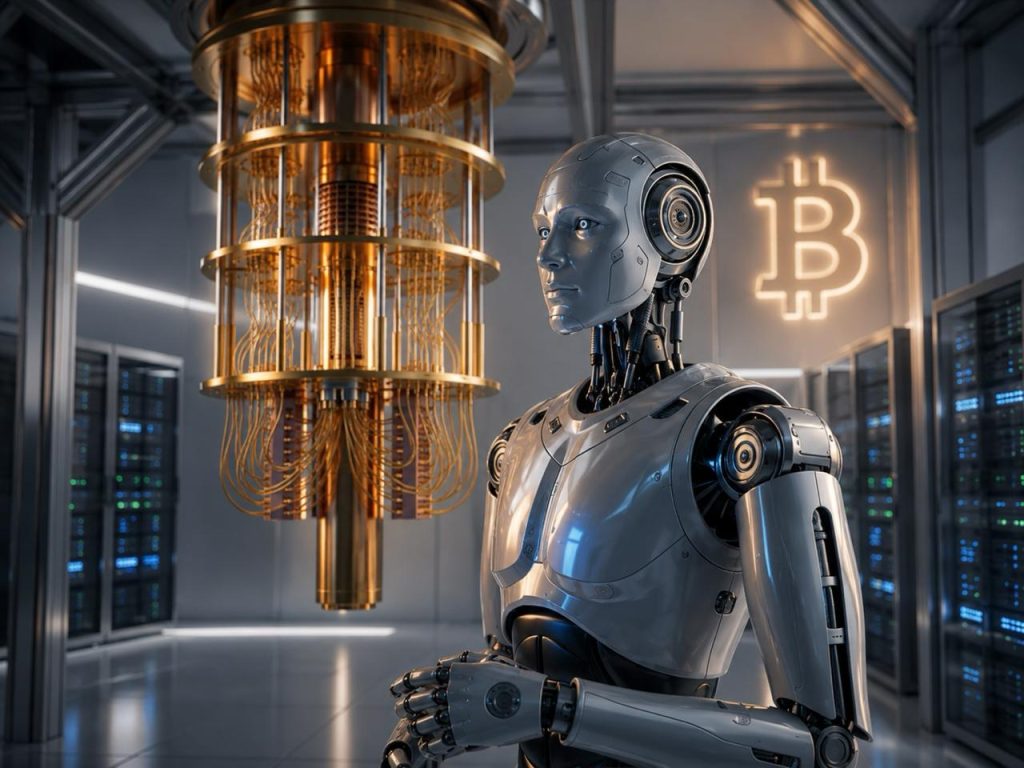
Today, another chapter is unfolding.
Around the world, innovation is advancing at an extraordinary pace. Artificial intelligence, robotics, biotechnology, renewable energy, advanced materials, and next-generation computing are no longer distant concepts confined to research laboratories. They are becoming practical tools that influence education, healthcare, transportation, communication, manufacturing, entertainment, and countless other aspects of modern life.
What makes this moment especially remarkable is not just the speed of technological progress, but the way different fields are beginning to converge. Innovations that once developed independently are now working together, creating solutions that are more capable, efficient, and accessible than ever before. This convergence is opening new possibilities for creativity, scientific discovery, and human collaboration.
Innovation is no longer limited to large organizations or specialized experts. Powerful tools are becoming available to students, educators, researchers, artists, entrepreneurs, and curious individuals everywhere. With access to digital platforms, online learning, and intelligent software, people can experiment, build, and solve problems in ways that would have seemed impossible only a decade ago.
Artificial intelligence, in particular, is changing how people interact with information. It can assist with research, simplify repetitive tasks, generate creative ideas, translate languages, analyze complex data, and support learning across countless disciplines. While AI is not a replacement for human judgment, imagination, or experience, it has become a valuable partner that allows people to focus more on creativity, critical thinking, and innovation.
Healthcare is also entering a transformative period. Advances in medical imaging, personalized treatments, wearable health technology, and digital diagnostics are helping professionals understand diseases more effectively and provide increasingly tailored care. Scientific collaboration across international research communities continues to accelerate discoveries that improve quality of life.
The transportation industry is evolving through electric vehicles, autonomous driving research, smarter infrastructure, and more efficient logistics systems. Cities are exploring new approaches to mobility that reduce congestion and improve sustainability while making travel safer and more convenient.
Communication has become faster, richer, and more interactive than ever before. High-speed networks, virtual collaboration tools, immersive digital environments, and real-time translation technologies allow people from different cultures and backgrounds to work together with fewer barriers than at any previous point in history.
Education is experiencing its own revolution. Interactive learning platforms, adaptive educational software, virtual laboratories, and AI-assisted tutoring are making knowledge more accessible to learners of all ages. People can acquire new skills from virtually anywhere, allowing lifelong learning to become a practical reality rather than an ideal.
Creative industries are flourishing alongside technological progress. Artists, filmmakers, musicians, writers, designers, and game developers are discovering entirely new ways to express ideas. Digital tools expand creative possibilities while preserving the importance of originality, storytelling, and human imagination.
Scientific research is advancing more rapidly through powerful simulations, sophisticated data analysis, and international collaboration. Researchers can process enormous volumes of information, test complex hypotheses, and accelerate discoveries across disciplines ranging from astronomy and environmental science to genetics and materials engineering.
Of course, every major technological transition brings questions as well as opportunities. Society must thoughtfully address issues related to privacy, security, ethics, accessibility, and responsible development. Innovation achieves its greatest impact when it serves people, respects human values, and contributes positively to communities around the world.
One of the most fascinating aspects of this era is that its full potential remains unknown. Many of the technologies that will shape everyday life ten years from now are still in their earliest stages. Just as previous generations could not fully predict smartphones, cloud computing, or social media, today’s innovations may evolve into applications that are currently beyond our imagination.
This is why curiosity has become one of the most valuable qualities a person can cultivate. Remaining open to learning, experimenting with new ideas, and adapting to changing technologies allows individuals to participate actively in the future rather than simply observing it.
Looking back several years from now, many people may realize that today’s developments marked the beginning of a remarkable transformation. The early signs are already visible, but history often shows that revolutionary changes become obvious only in hindsight.
The future is not arriving all at once. It is being built step by step through countless discoveries, creative ideas, and collaborative efforts taking place every day.
A new era of innovation has begun. The possibilities are expanding, the pace of change continues to accelerate, and the next breakthrough may be closer than anyone expects. Those who remain curious, continue learning, and embrace thoughtful innovation will be well positioned to witness — and help shape — the exciting chapters that lie ahead.